
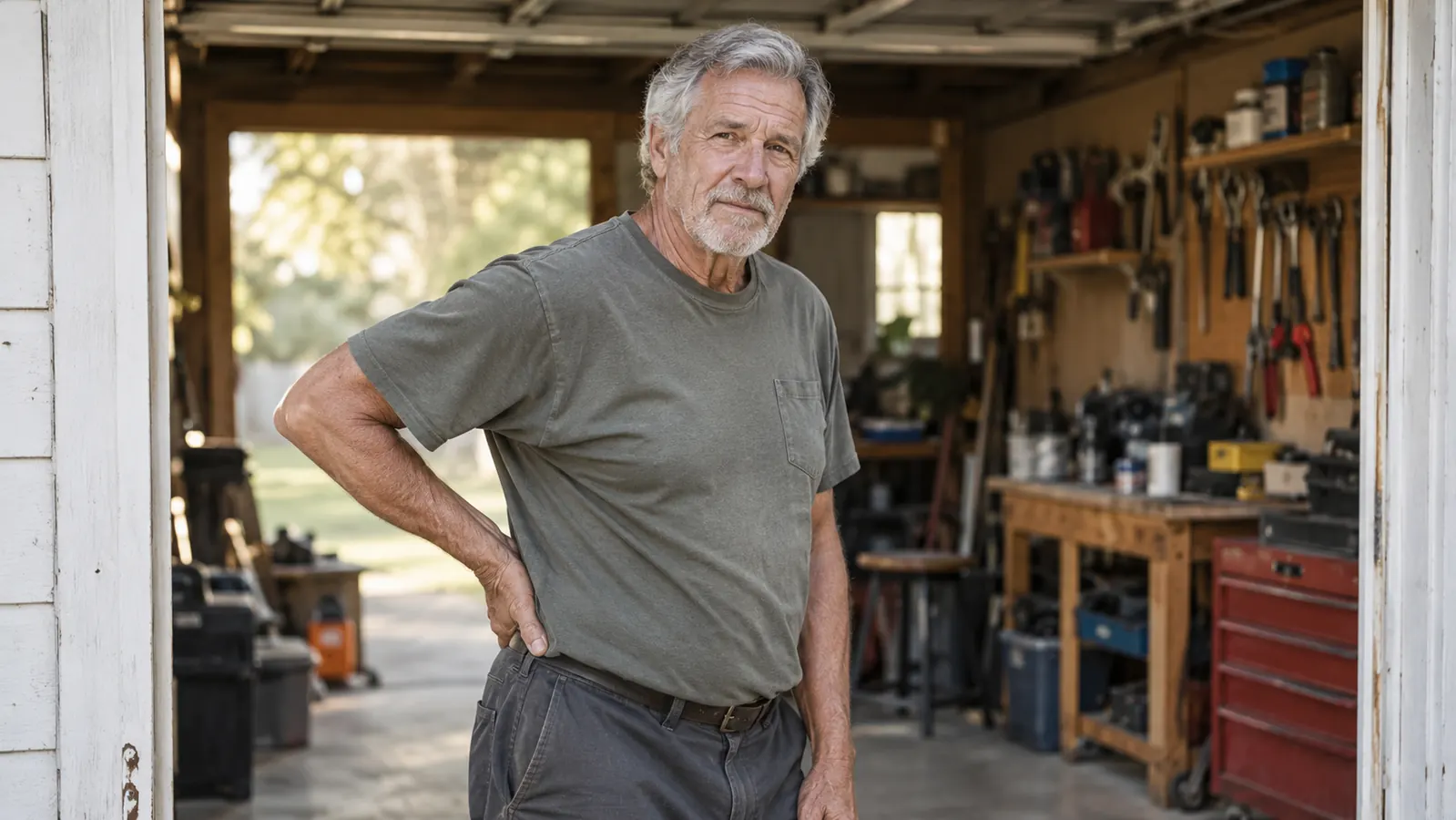
I spent 31 years in a county bus garage in Macon, Georgia, bent over engines and under chassis, and my lower back has been letting me know about it since about 2014. I retired in 2021. It did not retire with me. Mornings are still the stiffest part of my day, and a Saturday of yard work still puts me in the recliner by two in the afternoon.
So when the mulch pile showed up in April, I did something I had been putting off. I asked my physical therapist, Anita, whether a lumbar brace was worth wearing. She said fine for heavy days, not for all day. I bought the MUELLER Lumbar Back Brace with the removable pad that week, size Regular. Seven months later it hangs on a hook in my workshop, and I have a fair amount to tell you about what it does and what it flat will not do.
The Quick Verdict
A firm, simple support belt that earns its hook in the garage. It reminds me to lift with my legs on heavy days and it does nothing for me on a walk or in the truck. Wear it for the job, then take it off.
Amazon Check Today's Price →The belt I reach for before the mulch pile, not after
Size Regular fits waists 28 to 50 inches, so measure around the widest part of your waist before you order. It has four steel springs and a removable pad, and it goes on over a shirt in about ten seconds.
Amazon Check Today's Price on Amazon →How I've Used It
Anita's rule was the whole plan: heavy days only, and not all day. So that is exactly how I have used it. Mulch spreading in April. Moving Lorraine's old bookcases out to the curb in May. Bent-over work around the mower deck, which is the position that always gets me. Two or three hours at a stretch at the outside, and then it comes off.
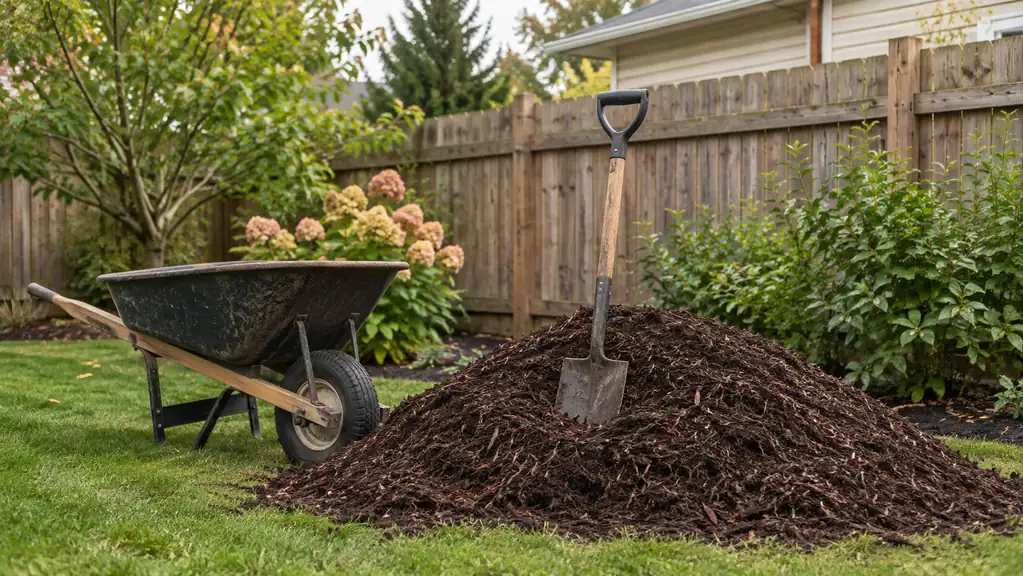
I will walk you through that first morning, because it is the most useful thing I can tell you. The pile was six yards of dark hardwood mulch, dropped on the driveway on a Thursday. I had the wheelbarrow, a flat shovel and a rake. I put the brace on in the workshop at about 8:15, over a grey T-shirt, and I had it too tight the first time. I could feel the front closure pressing when I bent forward for the shovel handle. I stood up, loosened both side pulls about an inch, and it settled. That inch matters. Tight enough to feel supported, loose enough to breathe through a shovel load. I worked until about eleven, took it off, drank a glass of water, and put it back on for a second stretch. Two and a half hours on, then off. That was the whole day.
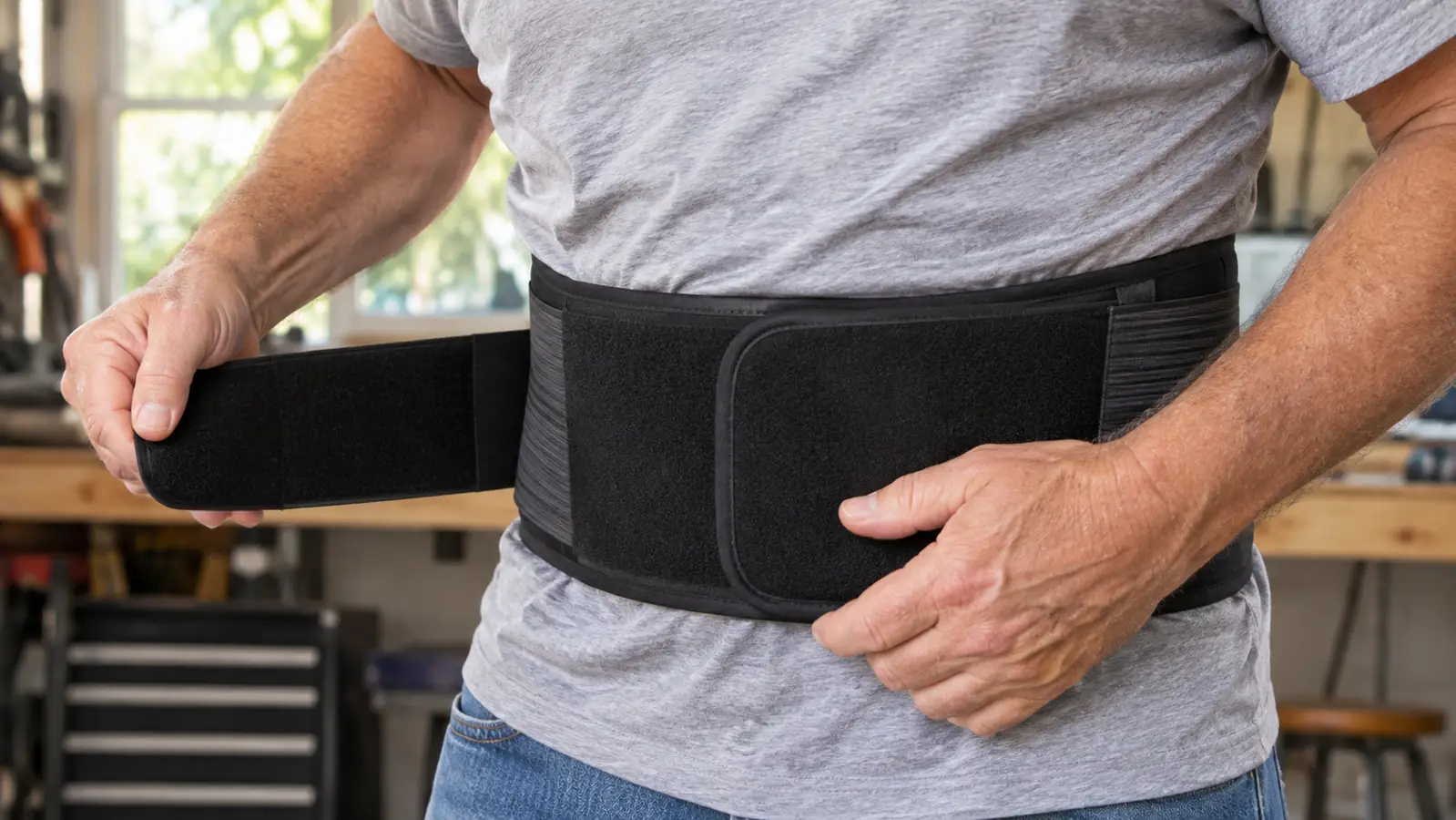
I wear it over a plain T-shirt, never against skin. The MUELLER has a front closure and two side pulls, so I set the middle of it around my belt line, get the closure snug, then tighten the sides until it feels like a firm hand pressing flat on my lower back. Not tight enough to change how I breathe. That took me a couple of tries the first morning. By the second week I could put it on without looking.
It has never been on my body for a walk. It has never been in the truck. It has never gone to Chattanooga with me. That is not a knock on it. That is the job I bought it for.
What the Brace Actually Is
The listing calls it a lumbar back brace with a removable pad, and that is a fair description. The outer material is a stretchable blend, polyester and neoprene among it, and the whole thing weighs 16 ounces. It is not a stiff plastic shell. It is a wide fabric belt with structure built into it, and that structure is the part that matters.
Four steel springs run vertically through the back panel. They are what give it that firm, targeted compression rather than just wrapping you in elastic. The removable pad sits behind them, right where my lower back curves in. I have kept the pad in the whole seven months. I tried it once without, for about twenty minutes, and put it back. The pad is the difference between pressure and support for me.
Sizing is the one place you can get this wrong. MUELLER lists three: Small for 22 to 30 inch waists, Regular for 28 to 50, Plus above that. Measure around the widest part of your waist, not your pant size, and not where you wear your jeans. I am a 38 and the Regular is right, with room to tighten the sides. If you are near the top of a range, that is worth a phone call to somebody who has one.
What Changed in the First Month
The honest answer is that the brace did not change my back. It changed my lifting.
That first day in April, spreading mulch, I noticed it within the first hour. Not because some ache vanished, but because the belt sits low and firm enough that when I bent at the waist to scoop, I felt it and I straightened up and used my legs instead. It is a reminder you wear. It is not a fix. I want to be straight with you about that because a lot of the writing on these things is not.
Comfort was fine from day one and better by week two. The 16 ounce weight is not noticeable once it is on, and it did not rub under the arms or dig into my hips. In the Georgia heat it does get warm across the back, since the material does not breathe the way a cotton shirt does. On an 85 degree afternoon I noticed it. I took a water break and loosened the sides a notch, which is easy to do without taking it off. That was late April. By June I had stopped wearing it past about eleven in the morning on anything above eighty-five. I would rather do two shorter stretches with a break than one long one with a wet back.
The bookcase day in May is worth describing too, because it was not yard work. Lorraine had two old particleboard bookcases in the spare room and they had to go out to the curb. That is dead-lifting and twisting, which is worse for me than mulch ever was. I put the brace on before I started, not after my back began complaining. That is the other thing I learned over seven months. The time to put it on is before. I carried the shelves out first, one at a time, then the frames with Lorraine holding the door. About forty minutes total. No soreness the next morning, which surprised me more than the mulch did.
Will I tell you the brace did that? No. Maybe I just lifted correctly for once in my life. What I can tell you is that the belt is what made me lift correctly, and that is close enough for the money.
Seven Months In: What Still Gets Used
This is the test I care about. Plenty of things work great the first week and then live in a drawer. I have a drawer like that. The cheap posture strap I bought in 2023 is in it, and it has been in there since about two weeks after I bought it.
The MUELLER is not in a drawer. It is on a hook by the workshop door, at eye level, where I see it on the way to the mower. That location is doing real work. If it were folded in a closet I would forget it exists, and forgetting is how a brace becomes a waste of money.
September and October is when the mower deck work happens, and that is the job that used to wreck me. Changing blades, scraping the underside, reaching in with a putty knife. I am bent at the waist with my head near the ground for fifteen or twenty minutes at a stretch. I wore the brace for that in September. The difference was not that my back stopped hurting. It was that I stood up between passes instead of staying folded over, because staying folded over felt wrong with the belt on. I finished the job and I was not stiff that evening. In past years I would have been on the heating pad by seven.
The parts have held up. No stretched-out elastic, no torn seams, no pad that has gone flat. The closure still grabs the way it did in April. I have not washed it, which the care instructions on something like this usually want you to do by hand. It does not smell, and the listing calls the material odor resistant, which has been my experience so far. Wiped it down once with a damp cloth.
What I use it for has not changed, and that is the point. It did not creep into my everyday life. Anita's rule held because it turned out to be the right rule. Wearing this thing to the grocery store would be a waste of a good tool.
It is a reminder you wear. It is not a fix. The belt sits low and firm, and when I bent at the waist to scoop mulch I felt it, straightened up, and used my legs instead.
Where It Falls Short
The heat. Neoprene and polyester do not breathe, so in a Macon July you feel the belt on your back within twenty minutes. That is not a defect exactly, it is what firm support costs. But if you run hot or you work outside in the summer, plan on breaks and a loosened side strap.
One more thing that is on me and not the brace. The first few weeks I had a habit of putting it on too low, down over my hips, and then it just felt like a wide belt with no purpose. The four steel springs need to sit across the small of your back, above the belt line, roughly where your back curves in. Once I moved it up that inch and a half, the whole thing made sense. There is a sweet spot and it is higher than you think. If you try one and it feels like nothing, check the height before you decide it does not work.
The bulk under clothes is the other one. Over a T-shirt it is fine. Under a shirt, tucked in, it is obvious. This is not a brace you wear to church or to a ballgame without people asking what happened to you. That is part of why it lives on a hook and not on my body.
And the biggest limitation is not the product at all. It does nothing for strength. If I wore it every day and never did the stretching program Anita gave me, I would be exactly where I started, plus a warm back. A brace supports. It does not build anything.
What I Liked
- Four steel springs give firm, even compression across the lower back rather than a soft wrap
- Front closure plus two side pulls means you can adjust the tightness without taking it off
- Removable pad is the difference between pressure and support, and it stays put
- Sizing range on the Regular covers 28 to 50 inches, so most people fit without a special order
- Build quality held up over seven months of intermittent heavy use with no stretch or seam failure
- Goes on over a shirt in seconds once you have done it a few times
Where It Falls Short
- Does not breathe; noticeable on a hot afternoon within twenty minutes
- Bulky enough to be obvious under clothing, so it is a work-only piece
- Does nothing for strength or mobility on its own, and is not meant to
- Pad and spring height take a couple of tries to dial in
- Not something to wear for a full day, and it should not be
Who This Is For
If you have a physical job or a heavy yard and your lower back complains about bent-over work, this is a sensible tool. The people I would point at it: the guy spreading eight bags of mulch, the woman moving boxes, anybody who spends a Saturday bent over a mower deck or a garden bed and pays for it Sunday. It also suits somebody who has been told by a therapist or a doctor that short-term support on heavy days is reasonable, which is exactly the conversation I had with Anita.
It suits the person who wants a plain, firm belt and does not want to think about it. No dials, no batteries, no learning curve past the second morning. Put it on, do the job, take it off, hang it up.
Who Should Skip It
Skip it if you are looking for something to wear all day at a desk. This is the wrong tool. It is too warm, too bulky under clothes, and all-day wear is not what Anita would sign off on for me. Look at a cushion or a different kind of support instead.
Skip it if you want it to fix your back. It will not, and nothing in my garage did either. My back is better managed than it was in 2014, not fixed. That took eight weeks of physical therapy in 2022 and a stretching program I still do most mornings, plus five minutes on a back stretcher before my walk. The brace is one small piece of that, and it is the piece that only comes out on heavy days.
And skip it, or at least call your doctor first, if your pain is new, sharp, shooting, or getting worse. I am a retired mechanic with a sore back, not a medical person. I write about what I bought and how it held up. For anything real, see somebody who knows what they are looking at.
If your Saturdays are the problem, this belt is a cheap way to spend them upright
Measure around the widest part of your waist, pick your size, and wear it for the job and not the whole day. That is the deal that has worked for me for seven months.
Amazon Check Today's Price on Amazon →