
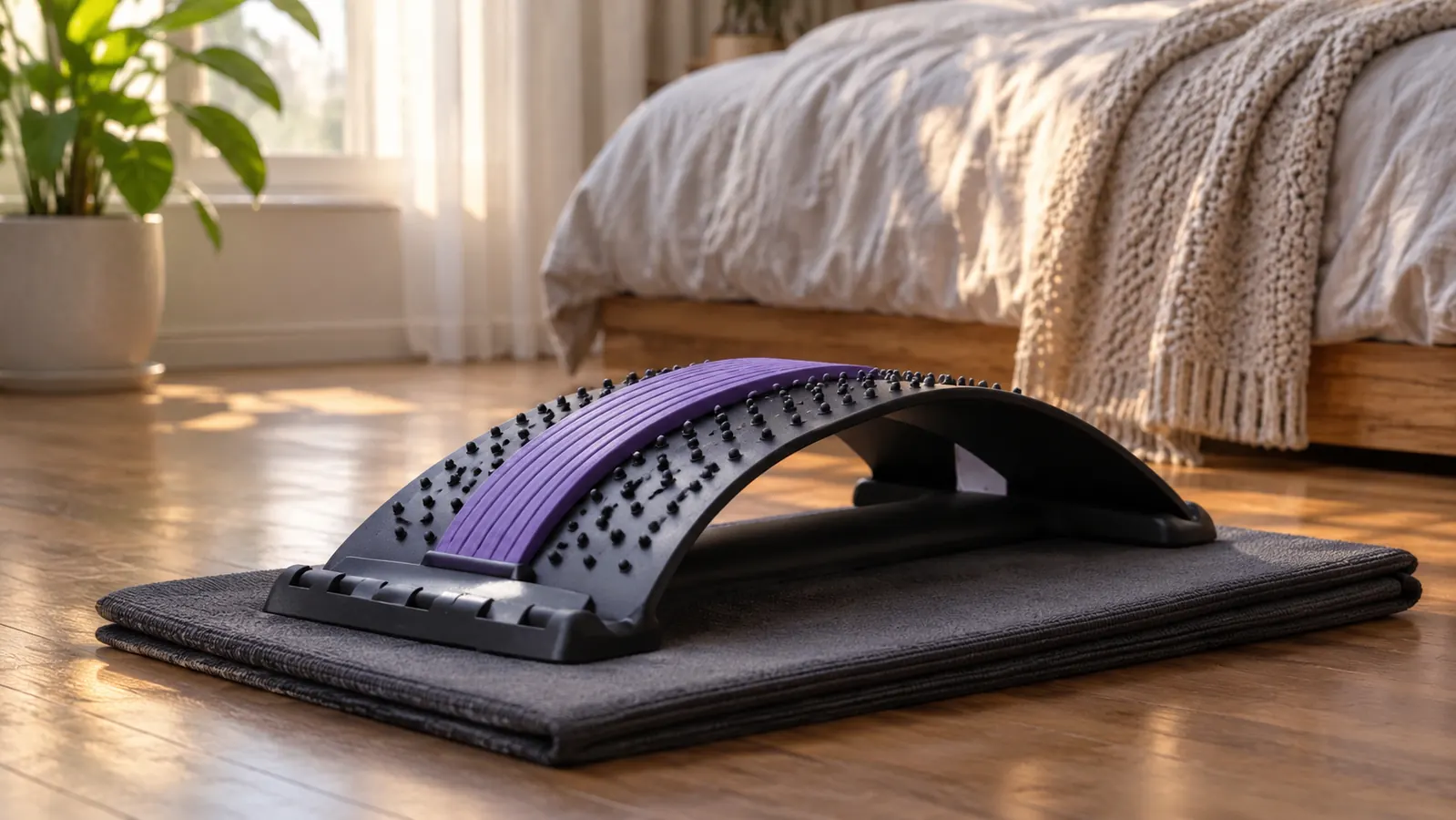
I own both of these and I did not buy them for the same job. The ChiFit back stretcher came into the house in June 2026, on my physical therapist's instruction to start at the lowest level and stay there a while. The foam roller came in 2024, also on her suggestion, and it has lived in the garage ever since, leaning against the wall by the bench where I keep the mower parts. Two pieces of gear, roughly the same idea, and only one of them gets used every single morning.
Short answer: if your back is at its worst in the first twenty minutes of the day, the ChiFit is the one I would buy first. If the soreness shows up later, after a long walk or an afternoon of yard work, the foam roller does more of what you actually need and asks less of you. And if you cannot get down on the floor and back up again without a handhold, neither one is your answer. I would tell you that at the hardware store rather than sell you something.
| ChiFit Back Stretcher | 36 Inch Foam Roller | |
|---|---|---|
| Getting into position | Lie back over it and the levels hold you in place, no balancing | You hold your own weight and roll, which takes shoulder strength and some balance |
| Adjustability | Three levels, so you can start low and stay there as long as you like | One firmness, no setting to change |
| Coverage | Stays put where it sits against the middle and lower back | 36 inches of surface, so you can work up the back, along the hips and down the legs |
| Pressure control | The level you set is the pressure you get | You decide how hard to press by how much weight you give it, and back off in a second |
| Space it takes | 15 x 4 x 2.8 inches, 1.1 pounds, slides under the edge of the bed | 36 inches long, stands in a corner or goes under the workbench |
| Learning curve | Three weeks on the bottom level before I moved up one | You know how hard you are pressing the first time you try it |
| Floor space needed | A firm floor and a mat | A firm floor and a mat |
| Best time of day | First thing, before a walk, when everything is stiff | After yard work or a long walk, once the muscles are warm |
How I Ended Up With Both
Anita suggested the roller back in 2024, mostly for the muscles along the back and into the hips. I bought a 36 inch one because that was the size on the shelf and I did not know any better. I used it faithfully for a few weeks. Then it drifted out to the garage, which is where things go when I stop reaching for them, and now I get it out maybe once a week in growing season and less than that in winter. It is not a bad tool. It just needs a decision from me every time, and I am not at my most decisive at six in the morning.
The stretcher was different. I asked Anita about one in June 2026 after seeing them in a catalog and not trusting the write-up. She told me to start on the lowest level and not to be in a hurry. I stayed on level one for three weeks. I have been on level two since, and I tried level three once, decided it was more than I wanted, and went back down. Five months in, it is the piece of gear I use most, and that is not a compliment to the gadget. It is a compliment to the fact that it takes five minutes and requires no decisions.
I will tell you what I expected, which was not much. A piece of molded plastic that a catalog promises the world to. I have bought two of those in my life and both went in a drawer. What changed my mind was that Anita, who has no reason to sell me anything, said to start at the bottom and stay there a few weeks. That is the opposite of a sales pitch, and it turned out to be the only advice that held up.
The honest part: the first two weeks on the stretcher felt sore, not good. I would not call that a selling point and I nearly quit. Somewhere around week four I noticed the morning stiffness easing sooner than it used to. It is still there. It eases sooner, and that is the whole of the claim I will make. If you want a story where the pain vanished, this is not that story.
It lives on a folded exercise mat on my side of the bedroom floor, which sounds like a small detail and is not. Gear that has to be fetched from another room does not get used. This one is close enough to the bed that I am on it before I have talked myself out of it.
Where ChiFit Wins
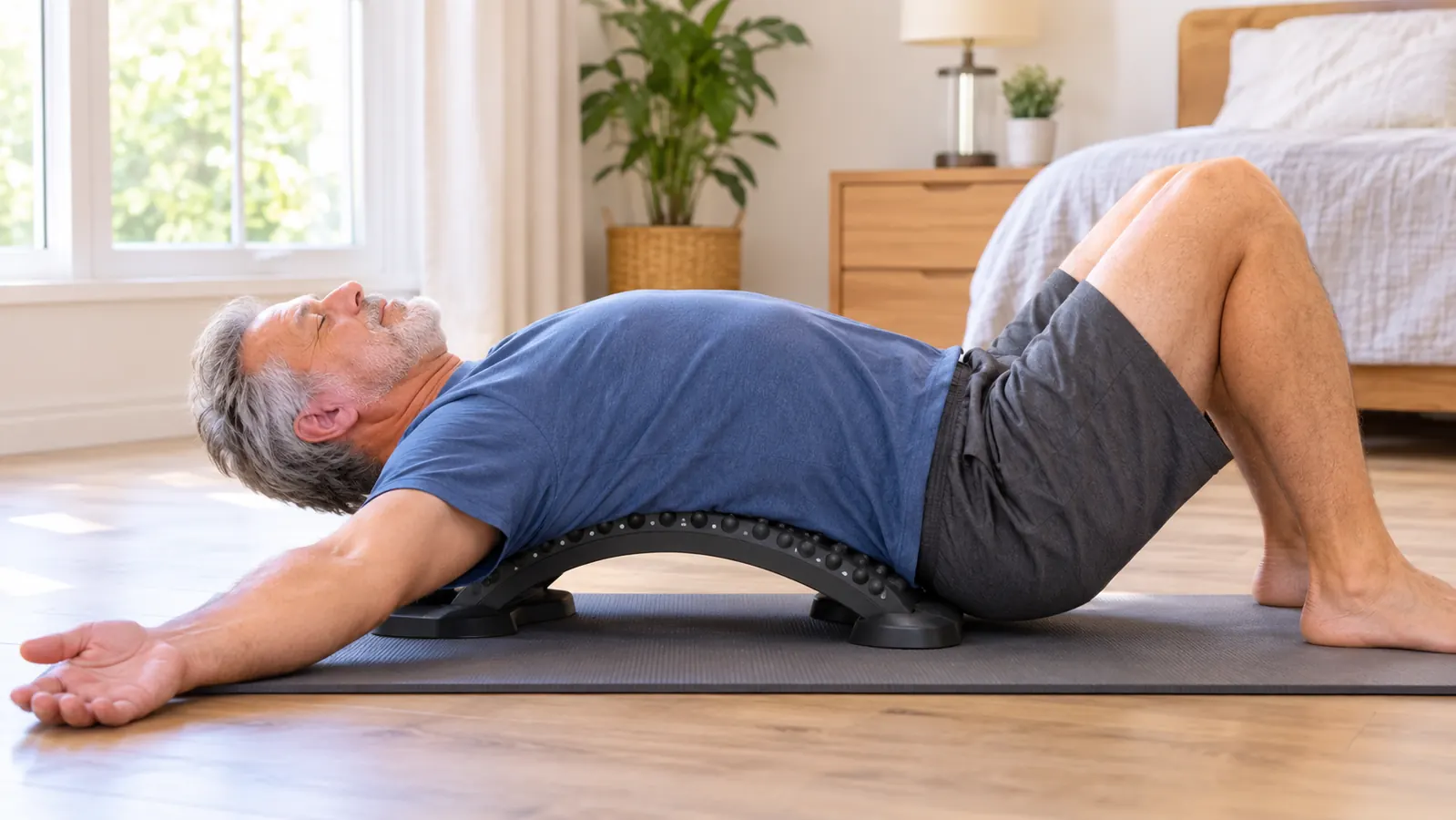
The thing the ChiFit does that the roller cannot is hold a position for you. I lie back over it, put my arms out, and the level underneath holds the shape of the stretch while I breathe. With a roller I am working the whole time, holding my weight, steering. At 6:30 in the morning with a stiff lower back, holding my own weight is the part I want to skip. The stretcher skips it.
The second thing is size. It measures 15 x 4 x 2.8 inches and weighs 1.1 pounds, so it slides under the edge of the bed and I never see it until I need it. It has a hard plastic frame with foam padding where you make contact, and the surface is covered in raised points rather than being smooth. I will be straight with you: I cannot tell you the points do anything in particular. They feel different from a flat surface, and after five minutes I am not thinking about them.
The levels are the part that matters. Three settings, changed by moving the frame, and level one is gentle enough that a sore back can stay on it. That is the whole reason Anita's advice worked. If the only setting had been the one I use now, I would have used it twice and quit, and I would have told you it was junk.
Where a Foam Roller Wins
Coverage. Thirty six inches of surface means I can work the whole back, the hips, the outside of the legs. The stretcher sits where it sits, against the middle and lower back, and it does not move. If your trouble runs into the hips or the legs, the roller reaches places a fixed device cannot. That is not a knock on the stretcher. It is a limit of the shape.
Pressure control is the other one. On the roller you decide how hard to press by how much weight you give it, and you can back off in a second. On the stretcher, the level you set is the pressure you get, and if level two is too much on a bad morning, your choices are to drop down a level or get off. Some mornings I drop back to level one. That is a fine thing to do and it took me a while to accept it.
The roller also suits a warm muscle. After I have been pushing a mower or hauling mulch, the muscles along my back are awake, and rolling them then feels like it is doing something. Rolling a cold back at dawn felt like a chore, and chores do not survive past week two in my house.
The stretcher is the only one of the two that gets used before I have had a cup of coffee. That tells you more than any spec sheet.
If the stiff part is the morning, this is where I would start
Three levels, 1.1 pounds, and it slides under the bed. Anita's advice was to stay on the bottom setting for a few weeks, and it was the only advice that stuck.
Amazon Check Today's Price on Amazon →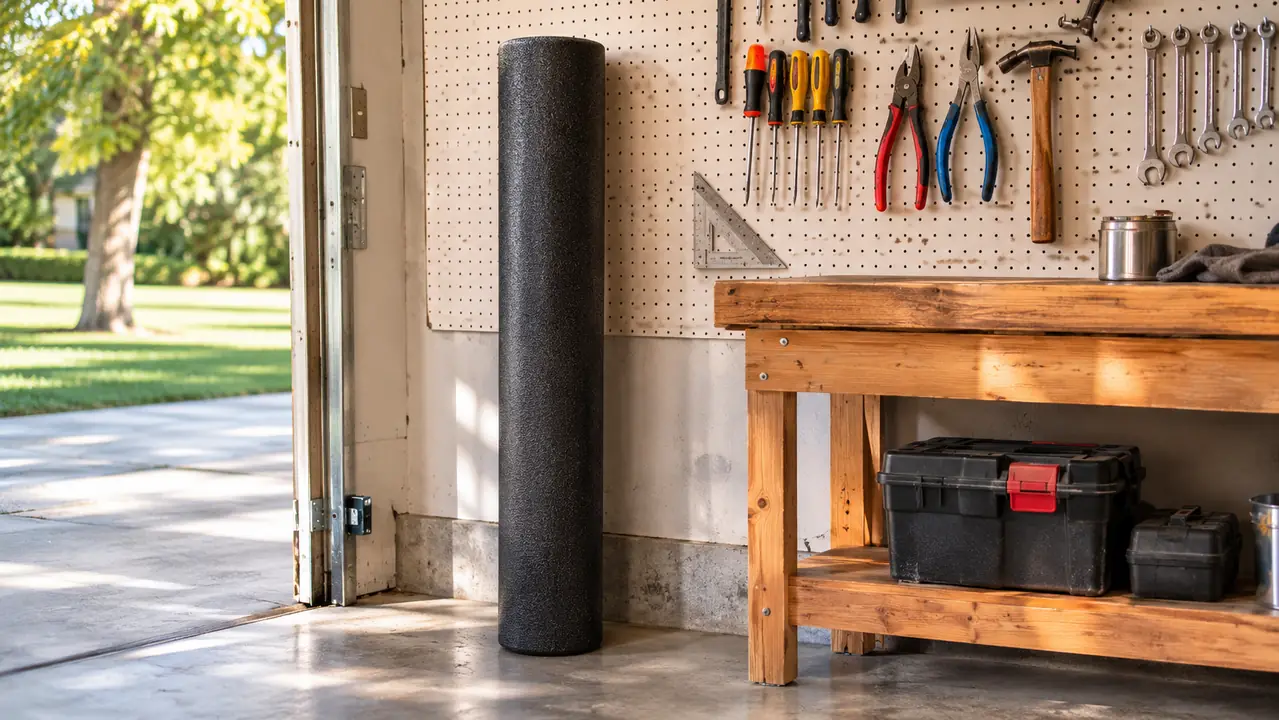
What Five Minutes Actually Feels Like
Six thirty, bedroom floor, folded mat, level two, five minutes. I lie back, arms out to the sides, and breathe. No phone. The first minute is the worst minute, mostly because everything is stiff and my body is arguing. By the third minute I have stopped arguing. I get up, put the mat back with my foot, and walk the neighborhood for half an hour. That is the routine, and it has not changed since July.
The first two weeks were sore, not good. I want that in plain language because the reviews I read before buying did not say it and I assumed I had wasted money. It settled. Around week four the mornings started easing sooner. Not gone. Sooner. My back is better managed than it was two years ago, and managed is the word I would use, not fixed.
Level three, for what it is worth, I tried once in August. Too much for me, and I went back to level two the next morning without ceremony. Anita told me at the start that people get hurt by moving up too fast, and I have no reason to doubt her. If you try this and you have a physical therapist, ask where to start. If you have real or worsening pain, that is a doctor conversation, not a gadget conversation.
For comparison, five minutes on the roller is not restful. It is work. I am up on my hands, rolling slowly, finding the spot that complains and staying on it. It feels useful and it feels like exercise, which is a different feeling from lying still and letting a piece of equipment do the holding.
What Neither One Does
Neither one of these fixed anything, and I would not trust a page that told me otherwise. I still do the stretching program Anita gave me in 2022. I still check in with her about twice a year. The stretcher and the roller are two tools inside that routine, not replacements for it, and neither of them is going to stand in for strength work, which I am still bad about.
The stretcher eases the morning some. The roller loosens the muscles after work. Neither one is a cure, neither one treats a condition, and neither one is a substitute for somebody who knows what they are looking at. If your back pain is new, or it is getting worse, or it runs down a leg with numbness, go see a doctor or a physical therapist. I am a retired bus mechanic with a sore back, not a clinician.
Who Should Buy Which
Buy the ChiFit first if your back is worst in the morning, if you want five minutes with no technique, and if you have a spot beside the bed where it can live. Buy it if you are the sort of person who will lie still for five minutes, which is a real requirement and not everyone can do it. Do not buy it expecting the first two weeks to feel good, because mine did not.
Buy the foam roller if you are already comfortable getting down on the floor, if the soreness comes after activity rather than before it, and if you want to reach the hips and legs too. If you are choosing one, choose by when it hurts. Morning stiff, stretcher. Evening sore, roller. If you have the space and the patience, both, used for different jobs, is where I landed. But I would ask a physical therapist where to start before buying either.
There is a third group worth naming. If you know yourself well enough to know you will not lie on a bedroom floor for five minutes, or that a roller will end up behind the mower, then buy neither and spend the money on a walk. I mean that. The gear is only worth anything if it survives week two, and the only reason mine did is that both of them sit in a place I already am.
Start at the bottom setting and stay there a while
That is the least exciting advice in this article and the only piece of it that changed my mornings. Three weeks on the low setting, then up one notch when it stopped feeling like anything.
Amazon Check Today's Price on Amazon →