
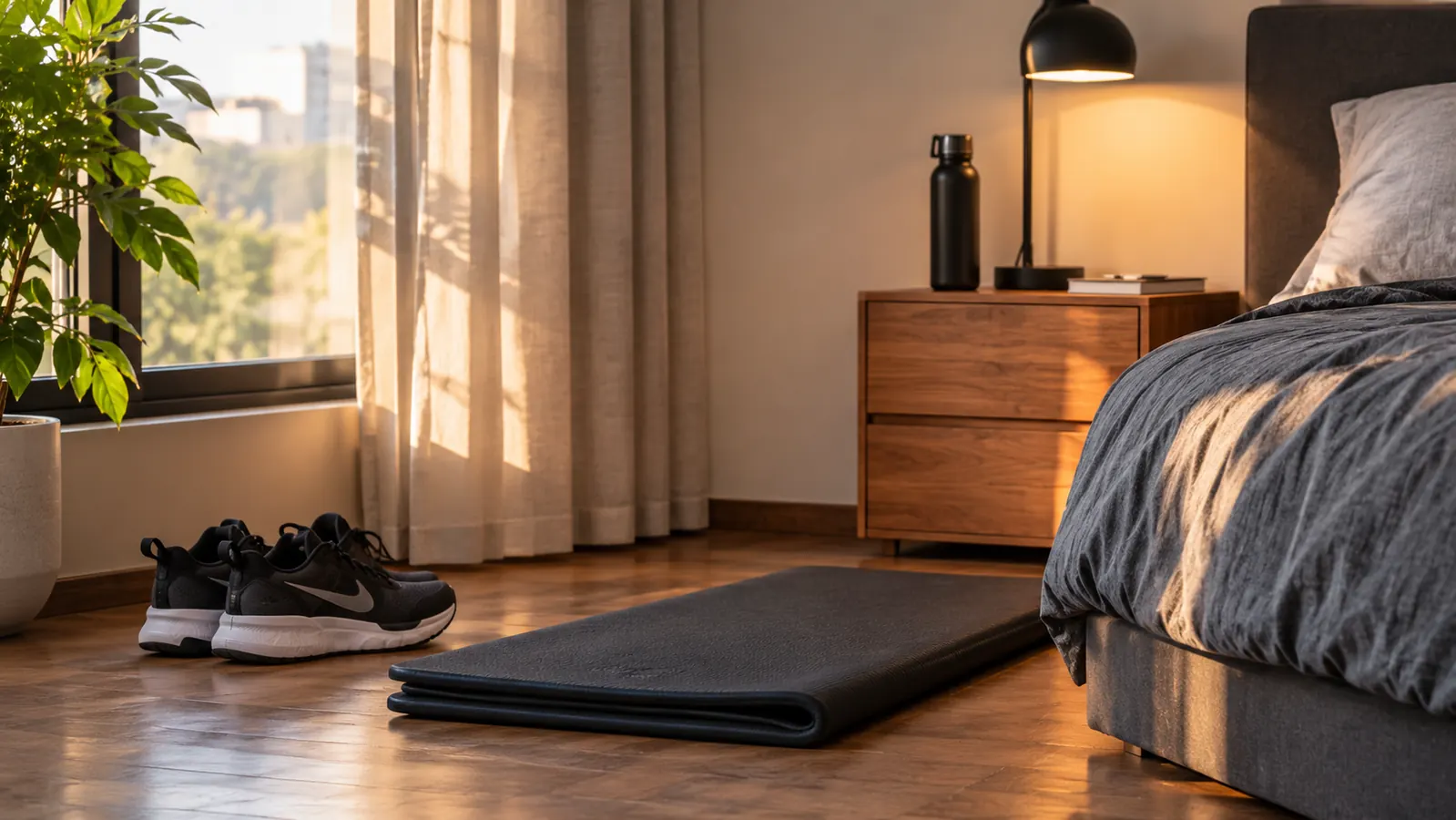
Morning is when my back tells me what kind of day it plans to be. I spent 31 years in a county bus garage, bent over engines and under chassis, and I retired in 2021 with a lower back that has been stiff and sore ever since. The worst of it hits in the first twenty minutes after I get out of bed. I have tried a lot of small things since then. The one I use every single morning now is the ChiFit back stretcher, five minutes on the bedroom floor before my walk. It has not fixed my back. It has made the morning a little easier to get through, and after five months I still use it.
I am not a doctor and I am not going to pretend this device is one. My physical therapist, Anita, gave me a home program years ago and I check in with her about twice a year. When I asked her about a back stretcher in June 2026, she told me to start on the lowest level and keep the sessions short. That advice matters more than any listing bullet. If your back is worse than mine, or if you have numbness, weakness, or pain that travels down a leg, talk to a doctor or a physical therapist before you lie down on one of these. This is a comfort tool, not a diagnosis.
Five minutes on the lowest level beats an ambitious session you regret
The ChiFit has three levels, and level one is where I stayed for three weeks. Start there, keep it short, and see how the next morning feels.
Amazon See the ChiFit Back Stretcher on Amazon →Step 1: Put it on the floor where you will actually use it
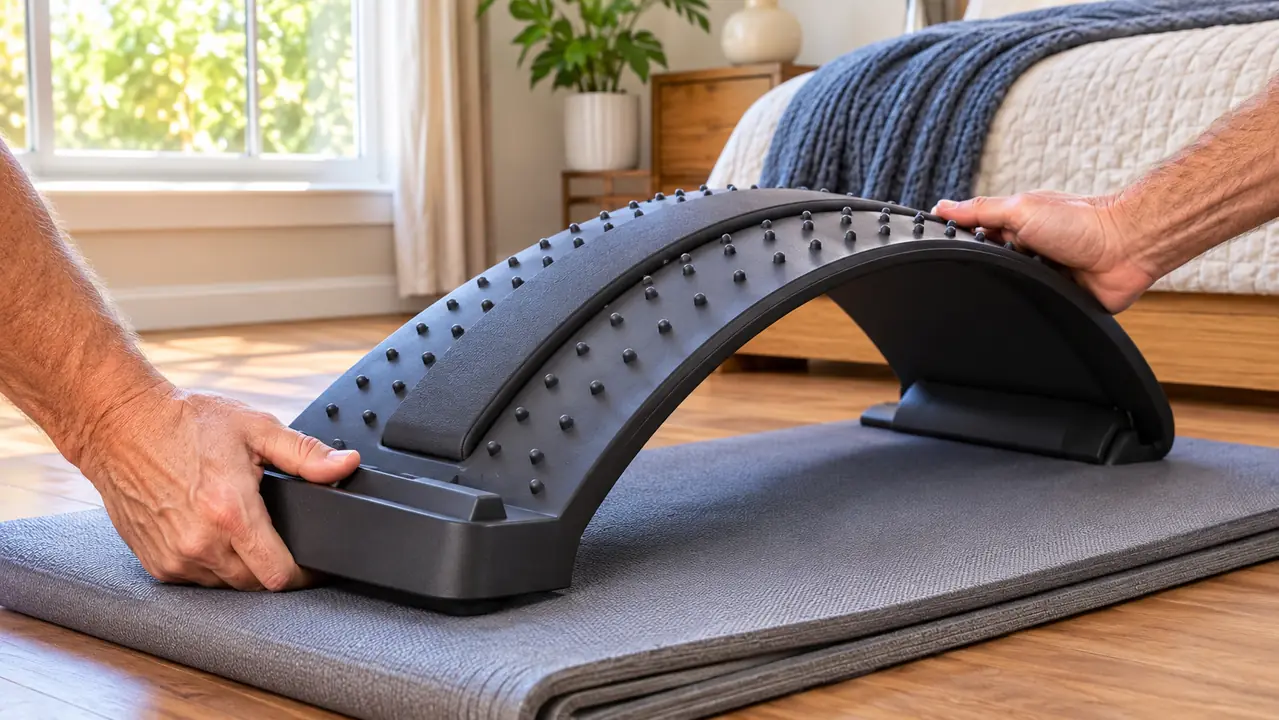
The ChiFit is 15 by 4 by 2.8 inches and about 1.1 pounds. That means it is small enough to tuck beside the bed and light enough to move with one hand. Mine sits on a folded exercise mat on my side of the bedroom floor. The mat is not part of the device. It just keeps the plastic frame from sliding on the hardwood and gives my shoulders something softer than the floor. I have a single-story brick ranch, so the bedroom is a few steps from the kitchen. That matters more than it sounds. If the tool is in another room, I will find a reason not to use it.
Put it under your lower back, not under your neck. I lie down on my back, bend my knees a little, and set the device so the main contact sits around my belt line. The first week I had it too high and it felt like a poke. Moving it down an inch made more difference than changing levels. If you are unsure where it should sit, ask a physical therapist to watch you place it once. That is better than guessing for a month, and it keeps you from turning a simple five minute habit into a project.
The device has three gear adjustments. I started on level 1 because Anita told me to, and because level 1 is the only sensible place to start. Do not lie down on level 3 to prove something. I tried level 3 once in September, after I had been on level 2 for months, and I went back down the same morning. There was nothing wrong with it. It was just more than I needed. The point is not to find the hardest setting. The point is to find the setting you can use tomorrow without thinking about it.
Step 2: Make five minutes the whole session
I set the ChiFit on the floor at about 6:30 every morning and stay on it for five minutes. Not ten. Not until I feel something dramatic. Five minutes is long enough to notice my back letting go a little, and short enough that I do not start negotiating with myself about skipping it. The clock on my nightstand does the timing. I leave my phone in the kitchen, because a phone on the floor turns five minutes into fifteen and turns a stretch into a scrolling session.
The first two weeks felt sore, not good. I want to be plain about that because the listing photos make it look like a spa. I would get up after five minutes and feel a dull ache in my lower back for an hour. It was not sharp and it did not travel down my leg, so I kept going, but I kept it at five minutes and level 1. If it had been sharp, or if I had felt tingling or numbness, I would have stopped and called Anita. I am repeating that because it is the part most people skip.
By the third week the soreness after the session had mostly gone. I stayed on level 1 for three weeks total, which was longer than I expected. There was no prize for moving up early. The morning stiffness was still there, but it started easing sooner in the day. That is the only change I can honestly point to, and it took about four weeks to show up. I did not suddenly spring out of bed. I just stopped dreading the first twenty minutes quite as much.
Step 3: Tell the difference between a stretch and a warning
A gentle stretch should feel like mild tension, not like something you have to grit your teeth through. On the ChiFit I feel the stretch across my lower back and a little through my hips. If I feel it in my neck, I have let my head drop or I have placed the device too high. If I feel a sharp catch, I get up. That is the whole test. No counting to a number. No pushing through. The five minute session is not a competition and there is no judge.
The warning signs are not mysterious. Sharp pain, numbness, tingling, weakness, or pain that shoots down a leg are reasons to stop and get advice. I am not saying the stretcher caused anything in my case. I am saying those signs are above my pay grade and above the pay grade of any product page. Check with a doctor or physical therapist before you keep going. A few days off will not undo your progress. Ignoring a warning sign can set you back a lot further.
The other warning is your own enthusiasm. The first week I liked it enough that I wanted to do it twice a day. I did not. I stayed with once a day, in the morning, because a routine I can repeat is worth more than a routine that impresses me for four days. Lorraine will tell you I am not naturally a moderate person. I have a workshop full of tools I bought because I thought I would use them every day. The five minute limit is the only reason this stayed a habit.

Step 4: Move up a level only when the current one feels routine
The ChiFit has three gear adjustments. I moved from level 1 to level 2 after three weeks, not because level 1 had stopped working, but because it had started to feel like part of the morning rather than a session. That is the signal I use. If I am still thinking about the stretch while I am on it, I am not ready to add more. If I can breathe normally and my mind has moved on to the grocery list, the setting has become routine.
Level 2 has been my setting since July 2026. I use it every morning for five minutes. It is enough that I notice it and enough that I can breathe normally. I tried level 3 once and went back to level 2. I am not against level 3. I just do not need it to get the benefit I am after, which is a slightly easier first twenty minutes of the day. If level 2 starts to feel like nothing, I may try level 3 again for a week. I will not do it on a morning when I am already stiff from yard work.
If you move up and the next morning feels worse, go back down for a week. That is not failure. That is how you use an adjustable device without letting the adjustment run the show. Anita told me the same thing about the Mueller brace I use for mulch days: the tool should fit the job, not the other way around. The brace is for heavy chores, not all day. The stretcher is for five minutes, not an hour. The walk is for every morning, and it does not need a gadget.
Step 5: Pair it with a walk and leave it where you can see it
I use the ChiFit, then I put on my shoes and take a 30 minute walk around the neighborhood. The stretcher is not a workout. The walk is the part that makes my back feel like it belongs to me again. I do not wear the brace on the walk and I do not carry anything. I just walk. Some mornings I take the same loop I have taken for years. Some mornings I cut it short. The point is to move after the stretch, not to turn the morning into a training program.
The device stays on the folded mat beside my bed. That is the whole storage system. If I had to unfold a chair or dig it out of a closet, I would skip it on the mornings I am running late. Keeping it visible is the difference between a tool and a drawer ornament. I have a drawer ornament already. It is a posture strap I bought in 2023 and wore for two weeks. It is still in the drawer. The ChiFit is on the floor because I can see it before I have had coffee.
Five months in, the ChiFit is still part of the morning. Some days I notice the stretch more than others. Some mornings I am stiff anyway. The difference is small and it is real. That is what I would tell a friend at the hardware store: do not expect it to remake your back. Expect it to give you a short, repeatable stop before the day starts. If you get that, it has earned its place on the floor. If you do not, you are allowed to move it to the garage.
What Else Helps
The stretcher is one piece of a routine, not the routine itself. The other pieces are unglamorous. I use a lumbar pillow in the truck on the drive to Chattanooga, because three hours up I-75 used to leave me stiff at the Calhoun stop. I wear a Mueller brace for heavy yard work, mulch and moving things, and only for a few hours. After yard work I use a Zyllion massager in the recliner for 15 minutes. In the evening I use a heating pad for 20 minutes. None of them replaced the ChiFit, and the ChiFit did not replace them.
Anita is the one who sorted the jobs for me. Morning: stretcher, then walk. Driving: pillow. Heavy chores: brace. After yard work: massager. Evening: heat. She also told me the brace was fine for heavy days but not all day, and she told me to start the stretcher on the lowest level. If you have a physical therapist, ask them to look at your setup. If you do not, and your back has been bothering you for more than a few weeks, get looked at before you build a routine around a device. A product page cannot tell you what your back needs.
What did not help is worth naming too. A rolled towel in the truck slid down on every drive. A microwave heat pack cooled off too fast. A cheap posture strap went in a drawer after two weeks. A foam roller in the garage gets used now and then, but it is not the same job as the stretcher. I am not saying those things would fail for you. I am saying they failed for me, and the things that stayed are the things that were easy to repeat. That is the filter I use now: can I do this tomorrow without a production?
The first two weeks felt sore, not good. Around week four the morning stiffness started easing sooner, though it is still there.
If your mornings start stiff, start with five minutes on level one
The ChiFit is not a fix. It is a small, repeatable stop before the day starts. Start low, keep it short, and give it a month.
Amazon See the ChiFit Back Stretcher on Amazon →